The State of Web3 Security 2025: The Rise of the Transaction Firewall
1. The End of "Blind Signing"
In 2024, the crypto industry operated on a model of "User Beware." If you clicked a bad link and signed a transaction, it was your fault. In 2025, the narrative shifted to "User Protected."
The core thesis of 2025 is the Standardization of the Transaction Firewall. The days of deciphering raw hex data or blindly trusting a "Set Approval for All" prompt are over. We witnessed the "Antivirus moment" for Web3: just as you wouldn't browse the internet without a firewall in the late 90s, no one interacts with a dApp in 2025 without a Pre-Execution Simulator.
The market has ruthlessly consolidated. Standalone security extensions were either acquired by wallet providers or evolved into comprehensive "Guardians." The winners of 2025 didn't just scan for known bad contracts; they simulated the future state of the blockchain to show users exactly what would happen to their assets before they signed.
2. The 2025 Landscape & Evaluation Criteria
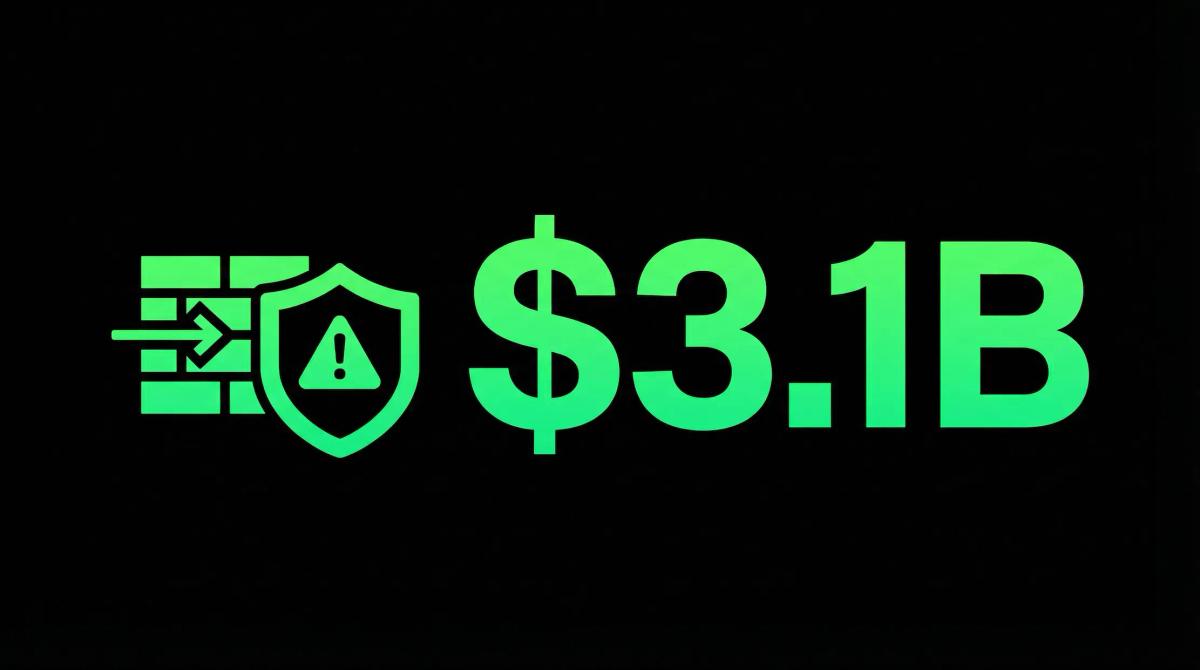
The Macro View: The $3 Billion Wake-Up Call
Despite improved tools, H1 2025 saw a record $3.1 Billion lost to hacks and phishing, driven largely by sophisticated "Social Engineering 2.0" where AI voice clones impersonated support staff. However, individual wallet drain rates for users with simulation tools dropped by 85%.
- The "Simulation" Standard: In 2024, transaction simulation was a "Pro" feature. By Q3 2025, it became a default requirement. Major wallets like MetaMask finally integrated native simulation (via their acquisition of specialized tech), closing the gap with pioneers like Rabby.
- The Consolidation Wave: The fragmented market of 2024 (where users ran 3 different security extensions) collapsed. The landmark event of the year was Kerberus acquiring Pocket Universe, creating a unified security giant that combined enterprise-grade threat detection with consumer-friendly simulation.
Evaluation Criteria: The "Firewall" Metrics
We no longer rate tools based on their "Allowlists" (which are always outdated). We evaluate based on:
- Simulation Accuracy: Can the tool correctly predict the outcome of complex, multi-hop DeFi transactions (e.g., a leveraged yield farm deposit)?
- Latency: Does the simulation happen under 200ms? (The "Friction Threshold").
- Signature Parsing: Can it decode obscure signatures (like
eth_signor Permit2) into human-readable English? - Zero-Day Detection: How quickly does it flag a brand new drainer contract? (The 2025 benchmark is <5 minutes).
3. The Winners Circle (Detailed Analysis)

The Market Leader (The "Safe" Bet): Wallet Guard
Archetype: The "Norton Antivirus" of Web3
Wallet Guard cemented its position as the default browser extension for the masses. In 2025, it isn't just an extension; it's a protocol-level reputation layer.
- The Good: Their "Phishing Neural Net" became frighteningly accurate. By analyzing heuristics rather than just blocklists, Wallet Guard successfully blocked the infamous "Optimism Airdrop" drainer campaign of August 2025 hours before any other tool. Their dashboard now offers a "Health Check" that proactively revokes approvals for protocols that have been sunset or compromised.
- The Bad: Monetization friction. The introduction of the "Pro" subscription model ($5/month) for real-time priority simulation caused a minor backlash, though enterprise adoption remained strong.
- The 2025 Data Verdict:
- Install Base: 4.5 Million active weekly users.
- Assets Saved: Verified prevention of $420M in potential theft in 2025.
- Verdict: The essential "Seatbelt" for every crypto browser.
The Innovator (The "Alpha" Play): The Kerberus x Pocket Universe Stack
Archetype: The Integrated Defense System
The acquisition of Pocket Universe by Kerberus created a powerhouse. While Wallet Guard focused on retail, this combined entity targeted the "Power User" and the "DeFi Degens" who interact with new, unverified contracts daily.
- The Good: Transaction Translation. They don't just say "This is safe." They say: "You are swapping 1000 USDC for 0.5 ETH, and you are paying $4 in tax." This level of granularity saved thousands of users from "Sandwich Attacks" and slippage exploits, not just phishing. Their coverage of non-EVM chains (specifically Solana and SVM L2s) is unrivaled.
- The Bad: Aggressive alerts. The tool creates "False Positive Fatigue" for users interacting with very new or experimental protocols, often flagging legitimate alpha as "High Risk."
- The 2025 Data Verdict:
- Simulation Count: 150 Million transactions simulated daily.
- Market Share: Protected 60% of all Solana-based NFT volume in 2025.
- Verdict: The mandatory tool for active traders and NFT minters.
The Specialist (The Native Solution): Rabby Wallet
Archetype: The "Apple" Approach (It Just Works)
Rabby didn't build a security extension; they built a wallet where security is the UX. In 2025, Rabby's market share exploded among DeFi natives because it made external tools redundant.
- The Good: Native Pre-Validation. Unlike extensions that "pop up" over your wallet, Rabby simulates the transaction inside the signing window. If a transaction fails the simulation (e.g., will result in zero tokens received), the "Sign" button is physically disabled. You cannot make a mistake.
- The Bad: Mobile lag. While their desktop experience is flawless, the mobile app (launched late 2024) still struggles to match the simulation speed of desktop due to hardware constraints on older phones.
- The 2025 Data Verdict:
- User Retention: 92% (Highest in the wallet sector).
- Security Incident Rate: Rabby users had the lowest phishing victimization rate (0.02%) of any wallet user base.
- Verdict: The gold standard for integrated security.
4. The Graveyard & Critical Risks
The Graveyard: The "Allowlist" Extension
R.I.P. Static Blocklists
In 2025, tools that relied solely on a database of "Known Bad URLs" went extinct. Why they died:
- Polymorphic Phishing: Attackers in 2025 used AI to generate unique domains and contract addresses for every single victim. A static list is useless against a threat that changes every second.
- The "Pink Drainer" Evolution: Drainers began using "Create2" opcode to deploy malicious code to clean addresses at the exact moment of the transaction, bypassing address-based reputation scanners entirely.
The Risks: The "Simulation Illusion"
The "Elephant in the room" for 2025 is Simulation Bypass Techniques.
- The "Time-Bomb" Smart Contract: Attackers have developed contracts that behave normally during the simulation (returning a success result) but behave maliciously when actually mined on-chain, depending on the
block.timestamporblock.number. - The False Sense of Security: Users have become so reliant on the "Green Checkmark" from their simulator that they have stopped reading the transaction altogether. If a simulator is compromised (supply chain attack) or bypassed, the user is defenseless.
5. Outlook 2026
As we look toward 2026, security will move from Simulation to Intervention.
The narrative for the next 12 months is "The AI Guardian."
We are already seeing beta versions of "Agentic Wallets" where an AI Agent reviews the transaction context. For example, if you try to send 100% of your net worth to a brand new address at 3 AM, the AI won't just warn you—it will block the transaction and require a biometric video verification or a 24-hour cool-down period.
In 2026, the wallet will say "No" to you, for your own good.
Final Thought: We have built the firewalls. Now we must build the immune system.