State of DeFi Lending 2025: The RWA Merger & The Battle for the Risk-Free Rate
Section 1: Summary
In 2024, we asked, "When will institutions come to DeFi?" In 2025, we realized they weren't coming to use our protocols—they were coming to be the collateral.
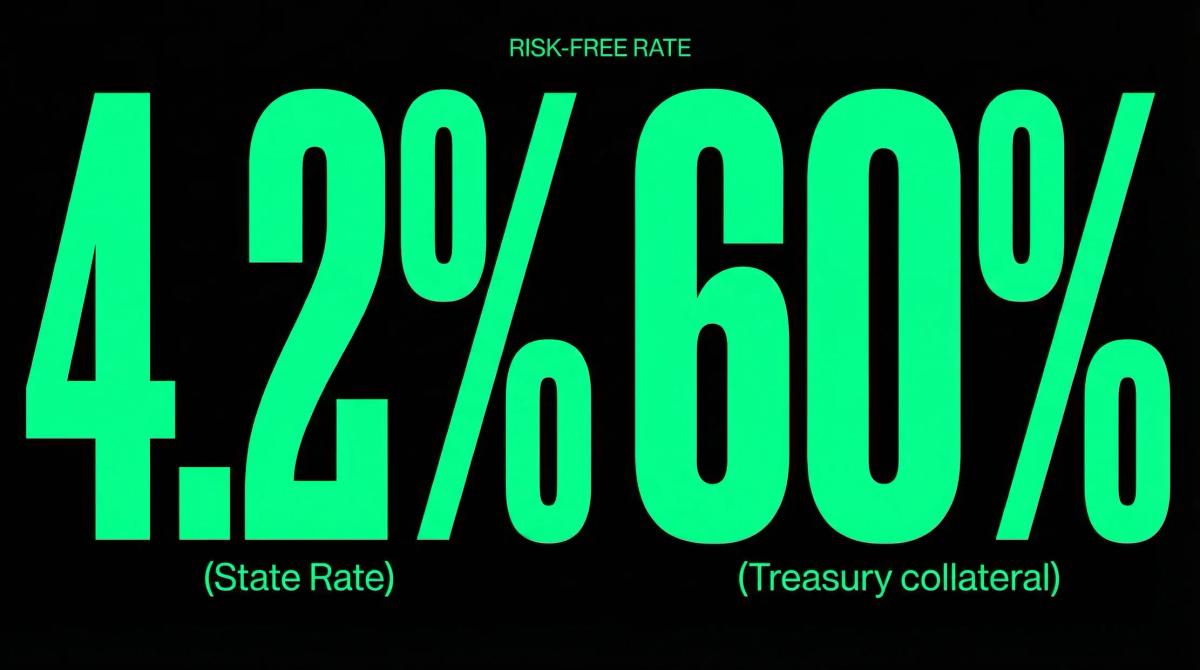
The era of "Yield Farming"—where APY was derived from inflationary token emissions—is officially a relic of the past. It has been replaced by the "Treasury Standard." As we close 2025, over 60% of all stablecoin collateral is now backed by tokenized US Treasuries or equivalent RWA (Real World Asset) instruments.
The market has bifurcated into two distinct yield curves:
- The "State Rate": ~4.2% Risk-Free Yield (derived from BlackRock/Securitize).
- The "Degen Rate": ~6-8% Crypto-Native Yield (derived from leverage demand on Aave).
Core Thesis: 2025 was the year DeFi lost its innocence but gained its scalability. The battle for liquidity is no longer about who has the best code, but who has the best legal wrapper. The winners are those who successfully bridged the gap between the Federal Reserve's interest rate and the Ethereum Virtual Machine.
Section 2: The 2025 Landscape & Evaluation Criteria
The Landscape: The $100 Billion Merger
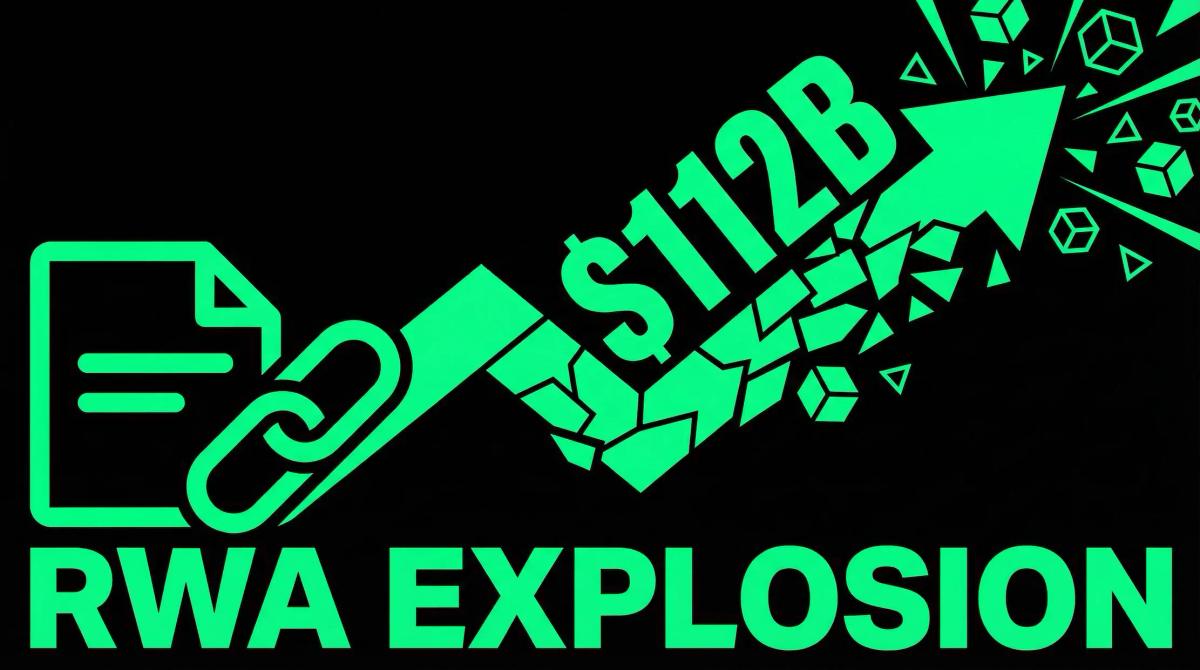
The "RWA Supercycle" predicted in 2024 materialized faster than expected, driven by the passing of the U.S. Stablecoin & RWA Clarity Act (the "GENIUS Act") in Q2 2025. This regulatory green light caused an explosion in tokenized debt.
- Total RWA TVL: $112 Billion (up 350% YoY).
- The "Silent" Flippening: In August 2025, the total value of tokenized T-Bills on-chain surpassed the TVL of all algorithmic stablecoins combined.
- Permissioned Pools: Aave Arc and Morpho "Blue" compliant vaults became the standard for institutional capital, segregating "KYC'd liquidity" from the public permissionless pools.
The Criteria: Evaluating the "On-Chain Banks"
We judged protocols not by raw TVL, but by Capital Efficiency and Integration Depth.
- Collateral Utility: Can your tokenized treasury be used as collateral? (Yield-bearing collateral is the holy grail).
- Redemption Latency: Can you exit to fiat in T+0 (instant) or T+2 (traditional banking speed)?
- Sovereignty vs. Compliance: How much control does the issuer have to freeze funds?
Section 3: The Winners Circle (Detailed Analysis)
The Market Leader: Sky (formerly MakerDAO)
Archetype: The "Central Bank" of DeFi. 2025 Verdict: The retail winner.
The rebrand to Sky (and the launch of the USDS stablecoin) was controversial in 2024, but the data proves it was the right strategic move. Sky successfully captured the "Retail Savings" market.
- The Good: The Sky Savings Rate (SSR) became the benchmark for the entire industry. By passing on 90% of T-Bill yield directly to USDS holders (auto-compounding in the wallet), Sky made holding non-yielding stablecoins (like basic USDC) feel financially irresponsible.
- The Alpha: The "Spark" subDAO expanded aggressively, offering low-interest loans against crypto assets to fund RWA purchases, effectively creating a leveraged carry trade that kept the SSR high.
- The 2025 Data Verdict: USDS Supply: $18B. Sky Savings Rate: consistently pegged at ~4.5% (20bps above the Fed Funds effective rate due to lending profit buffers).
The Innovator: BlackRock's Buidl Ecosystem
Archetype: The Institutional Titan / The "Trojan Horse." 2025 Verdict: The wholesale winner.
BlackRock did not build a DeFi protocol; they built the base layer asset that other protocols are addicted to. The Buidl token (and its permissionless wrapper, wBuidl) became the "pristine collateral" of 2025.
- The Good: Integration ubiquity. By Q3 2025, Buidl was accepted as collateral on Aave, Morpho, and Spark. It solved the "Negative Carry" problem: formerly, if you collateralized USDC to borrow ETH, your collateral sat idle. Now, your collateral earns 4.2% while it sits in the smart contract.
- The Bad: The "Kill Switch." Buidl remains a highly centralized, permissioned asset. In November 2025, the freezing of $40M in Buidl assets related to a hack sparked a fierce debate about the systemic risk of building DeFi on top of revocable assets.
- 2025 Data Verdict: $22B AUM. It is effectively the "USDT" of the institutional world.
The Specialist: Aave (The Liquidity Hub)
Archetype: The Clearinghouse. 2025 Verdict: The indispensable middleman.
Aave V4 (launched Feb 2025) cemented the protocol's status not as a lender, but as a Liquidity Layer. Aave is no longer competing with Sky or BlackRock; it is the venue where Sky's users borrow BlackRock's assets.
- The Good (The Unified Liquidity Layer): Aave V4's "Portal" feature allowed for instant movement of liquidity between Ethereum, Base, and Arbitrum, solving the fragmentation issue.
- The Alpha: GHO (Aave's stablecoin) finally found product-market fit as the "native debt" currency. Users borrow GHO against Buidl collateral to leverage up on yield. Aave essentially became the "Repo Market" of crypto.
- The 2025 Data Verdict: $45B Total Market Size. Aave generates more revenue ($300M annualized) than any other lending protocol by taking a cut on the spread between the RWA yield and the borrow rate.
Section 4: The Graveyard & Critical Risks
The Graveyard: "Yield Ponzi" Protocols
The high-APY lending platforms that dominated the 2021-2023 cycles are extinct. Projects that offered 20% APY via "governance token emissions" collapsed in Q1 2025. Why? Because 4% Real Yield > 20% Fake Yield. Institutional capital (and smart retail) realized that earning 4.2% on a risk-free T-Bill was superior to earning 20% in a token that dumps 30% in value. The "Real Yield" narrative killed the inflationary farming model.
The Elephant in the Room: Regulatory Capture
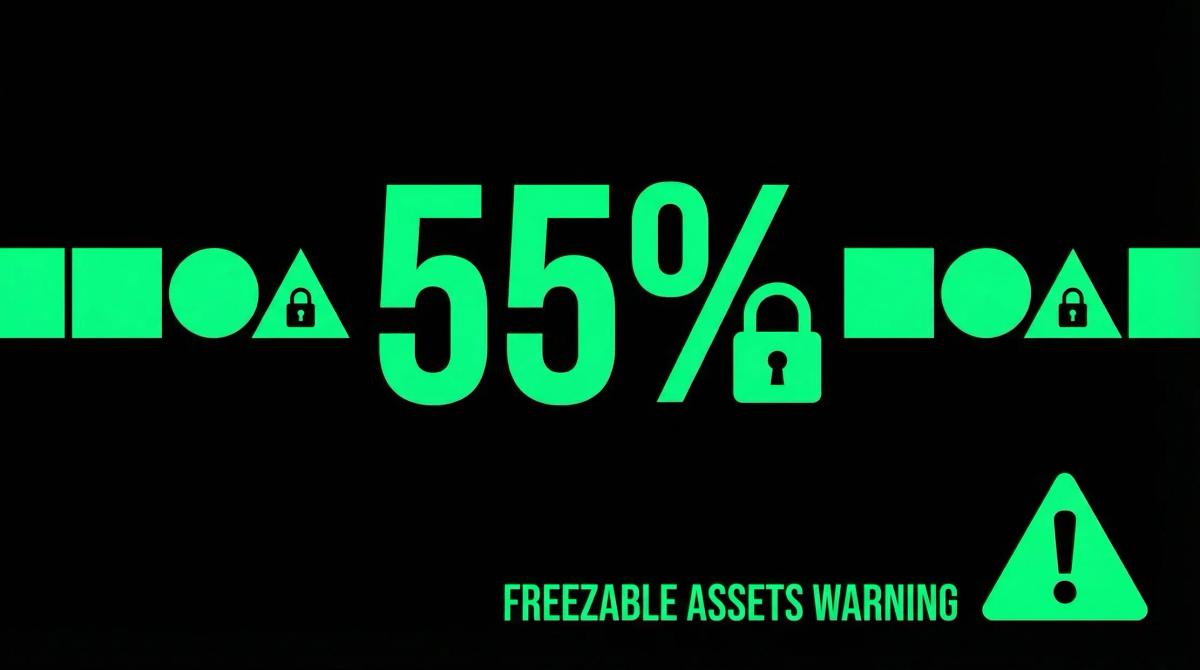
The victory of RWA comes at a cost: Censorship. As of December 2025, nearly 55% of the collateral on Aave is freezable by a central issuer (Circle, Tether, BlackRock, or Securitize).
Key Insight: We have rebuilt the traditional banking system on the blockchain. It is more efficient and transparent, but it is not permissionless. If the US Treasury decides to sanction a specific smart contract, BlackRock must comply, effectively breaking any DeFi protocol relying on that collateral.
Section 5: Outlook 2026
As we look toward 2026, the market will move from Public Treasuries to Private Credit.
The yield on Treasuries is stabilizing. The "Alpha" for 2026 will come from bringing Private Credit (corporate loans, real estate debt, trade finance) on-chain. We are already seeing Aave and Sky piloting "Credit Vaults" where users can lend strictly to S&P 500 companies via blockchain rails.
Closing Thesis: DeFi has successfully merged with TradFi. The "Crypto Casino" is closed; the "On-Chain Stock Exchange" is open for business.
Next Step for Investors: Review your stablecoin holdings. If you are holding non-yielding stablecoins (standard USDT/USDC) in a cold wallet, you are losing money against inflation. Move to an on-chain savings solution (like Sky's USDS or a Buidl wrapper) to capture the risk-free rate.